Does the Second Kitten Learn Things Faster? How Cats Learn From Each Other
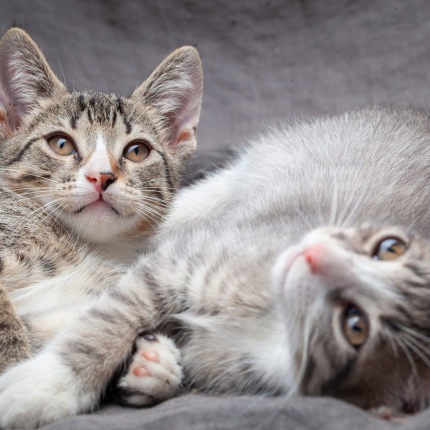
Have you ever noticed that your second kitten seems to figure everything out faster than your first? Maybe your first cat took weeks to become comfortable with the litter box, scratching post, or household routine, while the newcomer seemed to understand everything almost immediately. It might leave you wondering whether your second kitten is unusually intelligent or if having an experienced feline roommate gives them a head start.
As it turns out, there’s some fascinating science behind the idea that kittens can learn from other cats. Although being the second kitten doesn’t automatically make an animal smarter or faster at learning, growing up around another cat can provide opportunities for observation, imitation, and social learning that a kitten raised alone might not experience.
advertisement
Do Kittens Learn by Watching Other Cats?
Yes! Cats are capable of learning through observation, particularly when they’re young. While cats are often portrayed as independent animals that prefer figuring things out on their own, kittens actually learn a tremendous amount by watching their mothers, siblings, and other cats in their environment.
One of the most important periods of feline development occurs during kittenhood, when young cats are learning how to interact with their surroundings. Their mothers demonstrate behaviors such as grooming, hunting, and responding to potential threats. Kittens also learn from their littermates through play, which helps them develop coordination, communication skills, and an understanding of appropriate social boundaries.
Research has shown that kittens can learn certain behaviors by observing other cats. In classic observational learning experiments, kittens were able to acquire a task more readily after watching their mothers perform it. This suggests that watching an experienced cat can sometimes make learning easier, although the results depend on the behavior being learned and the relationship between the cats.
Why Your Second Kitten Might Seem to Learn Faster
When you bring a second kitten into a home with an established cat, the newcomer enters an environment where many of the household routines are already in place. Your first cat knows where meals are served, which furniture is comfortable, where the litter boxes are located, and what happens when you reach for the treat container. The new kitten can observe these routines rather than discovering every detail independently.
For example, a kitten might notice that the older cat runs into the kitchen whenever a particular cupboard opens. After seeing that behavior repeatedly, the kitten may begin making the same association. Similarly, watching another cat use a scratching post, explore a cat tree, or investigate a toy could encourage the newcomer to try those activities.
However, it’s important to distinguish between true imitation and other forms of learning. A kitten following an older cat to the food bowl may simply be responding to the other cat’s movement or curiosity about what they’re doing. That doesn’t necessarily mean the kitten understands the older cat’s behavior in the same way a human child might imitate a parent. Scientists recognize several different forms of social learning in animals, and not all involve directly copying another individual’s actions.
Can an Older Cat Teach a Kitten to Use the Litter Box?
Many cat owners believe their older cat taught the new kitten how to use the litter box, and it’s certainly possible that watching another cat could help a newcomer locate and investigate it. However, litter box use is also strongly influenced by cats’ natural instincts. Most kittens instinctively seek loose, diggable material when they need to eliminate, and many begin learning appropriate toileting behavior while they’re still with their mothers.
That means a second kitten who immediately uses the litter box isn’t necessarily copying the resident cat. They may already understand the behavior from earlier experiences, or they may simply recognize the litter as an appropriate place to eliminate.
Even if your kitten seems to understand the household routine immediately, it’s important to provide accessible litter boxes rather than expecting them to share everything with your existing cat. A commonly recommended guideline is one litter box per cat, plus one additional box, placed in separate, convenient locations.
What About Scratching Posts, Toys, and Other Household Habits?
These are areas where having another cat around may be particularly helpful. Kittens are naturally curious, and seeing an older cat interact with an object can make that object more interesting. A scratching post that initially seemed unremarkable might suddenly become fascinating after the kitten watches another cat stretch and scratch against it.
The same principle can apply to toys, climbing structures, and puzzle feeders. Watching another cat investigate something may draw a kitten’s attention to it, encouraging exploration and experimentation. Over time, the kitten may discover how to use the object independently.
However, the influence isn’t always positive. If your resident cat jumps onto kitchen counters, scratches furniture, or begs for food, your kitten may also become interested in those behaviors. Some apparent copying may simply reflect both cats responding to the same tempting environment, but living together certainly gives the newcomer more opportunities to discover what the older cat gets up to.
Does Having Another Cat Help Kittens Learn Social Skills?
One of the most valuable things another cat can provide is an opportunity to practice feline communication. Kittens learn important social skills through interactions with their mothers and littermates, including how to interpret body language, respond to warnings, and adjust the intensity of play.
When kittens wrestle, chase, and pounce on one another, they’re doing more than entertaining themselves. These interactions help develop coordination and can teach them how to respond when another cat signals that play has become too rough. A kitten that bites too hard may receive a hiss, a swat, or an abrupt end to the game, providing feedback about appropriate boundaries.
An older resident cat may offer similar opportunities, provided the relationship is comfortable and interactions remain safe. Some adult cats are remarkably patient with kittens, while others have little interest in becoming a full-time wrestling partner. A resident cat shouldn’t be expected to tolerate constant harassment simply because the newcomer is young.
It’s also worth remembering that an adult cat can’t completely replace the developmental experiences a kitten gains from growing up with its mother and littermates. Early social experiences remain important, even when a kitten later joins a multi-cat household.
advertisement
Do Kittens Learn Faster From Their Mothers Than Other Cats?
Research suggests that the relationship between the observing kitten and the cat demonstrating a behavior can matter. In observational learning studies, kittens have sometimes performed better when learning from their mothers than from unfamiliar adult cats. Familiarity, attention, and early social bonds may influence how effectively kittens learn from another animal.
This doesn’t mean your new kitten can’t learn anything from an unrelated resident cat. It simply means that learning from a familiar mother during early development isn’t necessarily the same experience as observing an adult cat after moving into a new home.
A kitten’s age, personality, previous experiences, confidence, and relationship with the resident cat can all influence whether they pay attention to another cat’s behavior. Some kittens eagerly follow their older companions everywhere, while others prefer exploring independently.
Could the Second Kitten Actually Learn More Slowly?
Absolutely. Having another cat in the home doesn’t guarantee faster learning, and in some situations it can make adjustment more challenging. A timid kitten might hesitate to explore if the resident cat is territorial or intimidating. Competition around food, litter boxes, resting spots, or toys can also create stress that interferes with normal behavior.
For example, if an older cat blocks access to the litter box, the kitten may begin eliminating elsewhere. If the resident cat guards a favorite scratching post or cat tree, the newcomer might avoid using it altogether. These situations don’t mean the kitten is less intelligent; they simply show how important it is to feel safe while learning and exploring.
That’s why gradual introductions and enough resources matter. Cats need opportunities to investigate their environment without feeling threatened or pressured by other animals.
Are Second Kittens Really Smarter, or Are Their Owners More Experienced?
Here’s another interesting possibility: sometimes the second kitten seems to learn faster because the humans have become better teachers.
Think about everything you learned while raising your first cat. You probably discovered which litter your cat preferred, where to position scratching posts, how to recognize signs of overstimulation, and which toys were most engaging. By the time your second kitten arrives, you’ve already made many of the adjustments that took trial and error the first time around.
Your home may also be better equipped for a kitten. Instead of introducing a scratching post weeks after noticing furniture damage, you already have several available. Rather than experimenting with different litter box locations, you’ve established a setup that works. And instead of accidentally rewarding unwanted behavior, you may be more consistent about encouraging the habits you want.
In other words, the second kitten may not be learning faster simply because another cat is present. They may also be benefiting from a more experienced owner and a home that’s already designed around feline needs.
How to Help Your New Kitten Learn From Your Resident Cat
If you’re hoping your established cat will help your new kitten settle in, the most important thing is to create a comfortable environment where positive interactions can happen naturally. Instead of forcing the cats to spend time together, give them chances to observe one another while keeping control of their own space.
Here are a few ways to encourage healthy learning and adjustment:
- Introduce them gradually: Begin with scent exchanges and supervised interactions before allowing unrestricted access to shared spaces.
- Provide separate resources: Make sure each cat has easy access to food, water, litter boxes, scratching surfaces, and comfortable resting areas.
- Encourage positive play: Use interactive toys to create enjoyable experiences while keeping both cats comfortable.
- Reward desirable behavior: Offer treats or praise when your kitten uses a scratching post, approaches a carrier voluntarily, or demonstrates other behaviors you’d like to encourage.
- Let the kitten explore independently: Observing another cat can be helpful, but kittens also need opportunities to investigate and solve problems on their own.
- Respect the resident cat’s boundaries: Provide elevated resting areas and quiet spaces where the older cat can escape an energetic kitten.
- Be patient: Every kitten develops at their own pace, regardless of whether another cat is present.
Remember that you shouldn’t rely on your resident cat to teach the kitten everything. Positive reinforcement, consistency, and a safe environment are still essential parts of helping your new companion develop good habits.
Is It Better to Raise Two Kittens Together?
Because kittens can learn and practice social behaviors with one another, some owners wonder whether adopting two kittens at the same time is better than bringing home one. Raising two compatible kittens together can offer more play, social interaction, and companionship, especially when their energy levels and personalities match well.
However, adopting two kittens isn’t automatically the right choice for every household. Two kittens require additional food, veterinary care, litter boxes, space, and financial resources. They also need individual attention and opportunities to develop confidence around people.
Likewise, a kitten living with a friendly adult cat may enjoy many of the benefits of feline companionship without necessarily needing another kitten. The quality of the relationship matters more than simply having multiple cats under one roof.
advertisement
The Bottom Line
So, does the second kitten learn things faster? Sometimes, yes! Kittens are capable of learning from observing other cats, and a newcomer may benefit from watching an experienced feline companion navigate household routines, investigate objects, and communicate social boundaries.
However, being the second kitten doesn’t automatically make a cat more intelligent or guarantee faster learning. Some behaviors, such as using a litter box, are influenced heavily by natural instincts and early experiences. Other apparent examples of imitation may simply involve curiosity, shared routines, or a kitten following another cat’s lead.
And don’t forget the human factor. By the time your second kitten arrives, you’ve probably become a much more experienced cat owner, which can make the entire adjustment process smoother.
Ultimately, every kitten is an individual. Some will eagerly follow their older feline companions around the house, learning where the treats are hidden and which windows offer the best bird-watching opportunities. Others will confidently figure everything out on their own.
Either way, there’s something undeniably entertaining about watching a tiny kitten study an older cat as though they’re attending a very important class in How to Be a Cat. And if the first lesson happens to be knocking things off the counter, well, at least they’re paying attention.
Search
Follow us!


Popular Posts
Featured Articles

The Odd-Eyed Cat (AKA Heterochromia)
Cats are already beautiful and fascinating creatures, but people are bound to take notice when they have something as captivating as two different colored eyes. Odd-eyed cats always have one blue eye paired with either a green, yellow, or brown eye. This form of heterochromia occurs in other animals, including…
Polydactyl Cats: Just More Beans to Love
Polydactyl cats have become extremely popular in recent times. As a result, more and more people are interested in learning more about this six-toed cat and want to get one of their own. If you are a cat lover intrigued by polydactyl cats, you have come to the right place….
Greebles and Cats: The Origin and the Meaning
You may have seen an internet sensation concerning cats labeled “greebles.” Feel out of the loop? We’re here to help you. In 2019, Reddit user /user/literallyatree commented on a Reddit post about a cat that looks like it’s trying to slap a ghost. This user commented: “My family calls things…