Do Cats See Color?
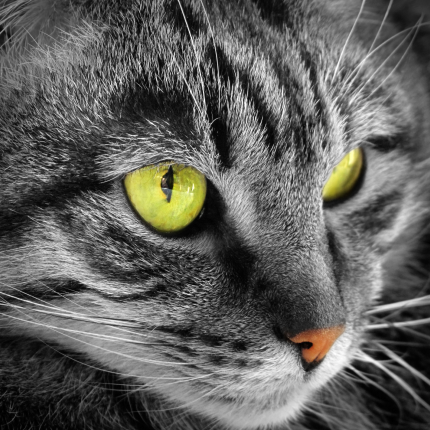
If you’ve ever dangled a brightly colored toy in front of your cat and wondered whether they actually see it the same way you do, you’re not alone. The idea that cats only see in black and white is a common myth, but the truth is much more interesting. Cats can see color, just not in the same way humans do. Their vision is uniquely adapted for hunting and low-light environments, which means color takes a backseat to other visual strengths. Here’s a closer look at how cats see the world.
advertisement
Do Cats See in Color?
Yes, cats can see color, but their color vision is limited compared to humans’. Humans have three types of color-detecting cells in the eye (called cones), which allow us to see a wide spectrum of colors, including reds, greens, and blues. Cats, on the other hand, have fewer types of cones. Because of this, cats are believed to see a more muted color palette, primarily in shades of:
- Blue
- Gray
- Yellowish tones
Colors like red and green are much harder for cats to distinguish. What looks bright and vibrant to you may appear more subdued or even grayish to your cat.
Why Is Cat Color Vision Limited?
Cats evolved as hunters that are most active during dawn and dusk. Because of this, their vision is optimized for low-light conditions rather than for detecting a wide range of colors. In fact, cats have more rod cells in their eyes than humans. Rod cells are responsible for detecting motion and seeing in dim light. This gives cats excellent night vision, but it reduces their reliance on color. In simple terms, cats traded a full color spectrum for better night vision and motion detection.
What Does the World Look Like to a Cat?
While we can’t see exactly through a cat’s eyes, scientists believe their world looks a bit like a slightly desaturated photograph.
Imagine:
- Colors that are softer and less vivid
- Blues and yellows stand out the most
- Reds and greens appearing dull or similar in tone
Even though their color vision is limited, cats make up for it in other ways—especially when it comes to detecting movement.
Movement Matters More Than Color
For cats, movement is far more important than color. Their eyes are designed to detect even the smallest motions, which helps them track prey. This is why your cat may ignore a brightly colored toy that’s sitting still but instantly pounce on a dull-colored object that moves. To your cat, how something moves is much more important than what color it is.
Do Colors Affect Cat Toys?
Since cats see blues and yellows more clearly than other colors, toys in those shades may stand out slightly more to them. However, the way a toy moves will always be the biggest factor in capturing your cat’s attention. Interactive toys that mimic prey, like fluttering feathers or darting movements, are far more engaging than stationary objects, regardless of color.
Other Ways Cats See Differently Than Humans
Color isn’t the only difference between human and feline vision. Cats also:
- Have better night vision than humans
- See better in low light
- Have a wider field of view
- Have a slightly blurred vision at close distances
All of these traits help cats excel as hunters, even if their world isn’t as colorful as ours.
advertisement
The Bottom Line
Cats do see color, but in a more limited and muted way than humans. Their vision is focused less on bright, varied colors and more on detecting movement and navigating in low-light environments. So while your cat may not appreciate the exact color of their toys, they’re still perfectly equipped to explore, play, and hunt in their own unique way. In your cat’s world, it’s not about how colorful something is; it’s about how it moves.
Search
Follow us!


Popular Posts
Featured Articles
Polydactyl Cats: Just More Beans to Love
Polydactyl cats have become extremely popular in recent times. As a result, more and more people are interested in learning more about this six-toed cat and want to get one of their own. If you are a cat lover intrigued by polydactyl cats, you have come to the right place….
Greebles and Cats: The Origin and the Meaning
You may have seen an internet sensation concerning cats labeled “greebles.” Feel out of the loop? We’re here to help you. In 2019, Reddit user /user/literallyatree commented on a Reddit post about a cat that looks like it’s trying to slap a ghost. This user commented: “My family calls things…
Why Do Cats Roll Over Into Their Backs But Not Let You Touch Their Bellies?
It’s common knowledge dogs love to have their tummies rubbed when they freely lay down before you and roll onto their backs. But, if you’re also familiar with cats, you know that when they roll onto their backs with their bellies exposed, rubbing the belly will most likely result in…