Why Does My Cat Cackle?
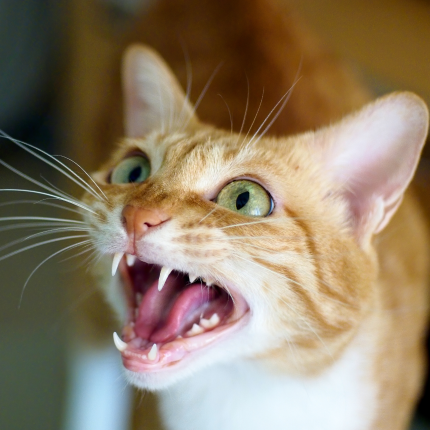
You’re sitting peacefully at home when suddenly you hear an unusual noise coming from your cat. Their eyes are locked on a bird outside the window, their mouth is rapidly opening and closing, and they’re making a strange series of clicks, chirps, or squeaks. Is your cat cackling? Sort of! This unusual feline behavior is commonly known as chattering or chittering, although some cat owners affectionately describe it as cackling. It’s one of the stranger sounds in the feline vocabulary, and scientists aren’t entirely certain why cats do it. However, several fascinating theories exist.
advertisement
What Does Cat Cackling Sound Like?
Cat chattering is usually a rapid clicking or stuttering sound, accompanied by quick jaw movements. Some cats produce tiny squeaks or chirps at the same time, making the noise sound almost as though they’re attempting to talk.
You might notice your cat’s:
- Jaw rapidly opening and closing
- Teeth clicking together
- Whiskers pointing forward
- Eyes intensely focused on something
- Tail twitching or swishing
- Body becoming alert and ready to pounce
This behavior is particularly common when cats watch birds, squirrels, insects, or other small animals they can’t reach.
Is Your Cat’s Hunting Instinct Taking Over?
One of the most likely explanations for cat chattering involves the hunting instinct. Domestic cats may enjoy comfortable beds and food delivered directly into their bowls, but underneath all that fluff is an extremely capable little predator. Watching potential prey can activate many of the same instincts cats would use while hunting. That intense stare, twitching tail, forward-facing ears, and strange chatter may all be part of your cat’s natural response to spotting something they’d very much like to chase. In other words, your cat may be sitting safely behind a window, but mentally, they’re already on the hunt.
Could Your Cat Be Frustrated?
Another popular theory is that cats chatter because they’re frustrated. Imagine seeing something you desperately want that’s sitting just beyond your reach. That’s essentially what happens when an indoor cat spots a bird through a closed window. The prey is right there. Your cat can see it. They can hear it. They may even be able to smell it. But there’s an inconvenient piece of glass standing in the way. The resulting excitement and frustration may contribute to those rapid-fire clicking sounds.
Are Cats Imitating Their Prey?
Here’s where things get particularly interesting. Another theory suggests that some cats may use vocalizations to imitate prey sounds. Researchers have observed wild cats producing calls that resemble those of the animals they were stalking, raising the possibility that vocal mimicry could occasionally play a role in hunting. Whether your house cat is deliberately trying to impersonate the bird outside your window is far from certain. More research is needed before we can say exactly what feline chattering means. Still, it’s an intriguing possibility.
Is Cat Chattering the Same as Chirping?
Not exactly, although the two behaviors can overlap. Chattering usually involves rapid jaw movements and clicking noises, especially while watching potential prey. Chirping or trilling tends to be a higher-pitched vocalization. Cats may chirp at birds, but they can also trill at their owners as a greeting or as a way of getting attention. A mother cat may use similar vocalizations to communicate with her kittens, which could help explain why some adult cats use chirps and trills when interacting with humans.
Why Does My Cat Cackle at Me?
Things become a little more complicated if your cat makes unusual chirping or chattering noises while looking directly at you. In that situation, your cat may simply be communicating. Cats develop an impressive assortment of sounds for interacting with their humans. Your cat may chirp because they’re excited, want attention, expect food, or would like you to follow them somewhere. Pay attention to what happens immediately before and after the sound. Context can provide clues about what your cat is trying to tell you.
Should You Be Concerned About Cat Cackling?
Normal chattering while watching a bird or other exciting object is generally nothing to worry about. It’s typically just another fascinating example of feline behavior. However, unusual jaw movements aren’t always harmless. Contact your veterinarian if your cat suddenly begins making repetitive jaw movements without an obvious trigger or if the behavior is accompanied by symptoms such as:
- Drooling
- Difficulty eating
- Bad breath
- Pawing at the mouth
- Swelling around the face or mouth
- Loss of appetite
- Signs of pain
- Unusual or uncontrolled movements
Dental disease, mouth pain, and other medical problems can sometimes cause movements that might initially be mistaken for ordinary chattering.
Can You Give a Chattering Cat an Outlet for Their Hunting Instincts?
If your cat spends hours staring longingly at the wildlife outside, interactive play can provide an appropriate outlet for some of that predatory energy. Try toys that allow your cat to stalk, chase, pounce, and capture something. Wand toys, toy mice, moving toys, and food puzzles can all provide valuable enrichment. Allowing your cat to actually “catch” the toy periodically can make the game especially satisfying. A play session followed by a small meal can also mimic the natural sequence of hunting, catching, and eating.
Don’t Punish Your Cat for Chattering
Although the sound can be strange, there’s no reason to discourage normal cat chattering. Your cat isn’t misbehaving or necessarily experiencing distress. They’re simply responding to something that has captured their attention and awakened some very old instincts. In fact, watching your cat chatter at a bird can be a fun reminder that the sleepy animal curled up on your couch still has quite a bit in common with their wild ancestors.
advertisement
The Bottom Line
So, why does your cat cackle? We don’t know with absolute certainty. Chattering appears to be strongly associated with excitement and predatory behavior, particularly when a cat can see potential prey but can’t reach it. It may reflect hunting instincts, frustration, intense anticipation, or perhaps even an attempt at vocal mimicry. Whatever is going through your cat’s mind, the behavior is usually completely normal. The next time your cat spots a bird and suddenly transforms into a tiny clicking, chirping predator, take a moment to appreciate one of the many wonderfully weird behaviors that make cats so fascinating.
Search
Follow us!


Popular Posts
Featured Articles
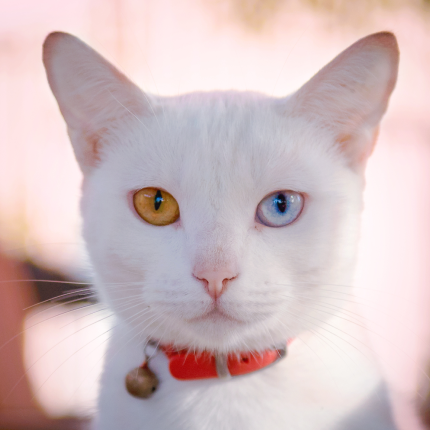
The Odd-Eyed Cat (AKA Heterochromia)
Cats are already beautiful and fascinating creatures, but people are bound to take notice when they have something as captivating as two different colored eyes. Odd-eyed cats always have one blue eye paired with either a green, yellow, or brown eye. This form of heterochromia occurs in other animals, including…
Greebles and Cats: The Origin and the Meaning
You may have seen an internet sensation concerning cats labeled “greebles.” Feel out of the loop? We’re here to help you. In 2019, Reddit user /user/literallyatree commented on a Reddit post about a cat that looks like it’s trying to slap a ghost. This user commented: “My family calls things…
Polydactyl Cats: Just More Beans to Love
Polydactyl cats have become extremely popular in recent times. As a result, more and more people are interested in learning more about this six-toed cat and want to get one of their own. If you are a cat lover intrigued by polydactyl cats, you have come to the right place….