Do Cats Really Get Stuck in Trees? The Truth About Our Feline Tree Climbers
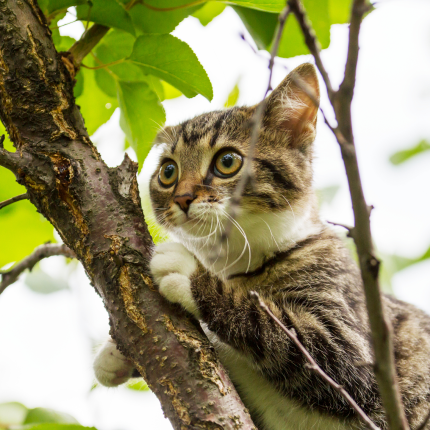
It’s one of the most recognizable scenes in cartoons and movies: a frightened cat perched high in a tree, meowing desperately while someone calls the fire department for help. But does this actually happen in real life, or is the whole idea of cats getting stuck in trees just an exaggerated television trope?
As it turns out, cats absolutely can get stuck in trees, and it happens for some surprisingly interesting reasons. Despite being incredibly skilled climbers, cats aren’t always equally talented at getting back down. Their anatomy, instincts, and emotional responses can all contribute to a situation where climbing up is much easier than climbing down.
Fortunately, many cats eventually find their own way to the ground, but others genuinely need assistance. Understanding why cats climb trees, what makes descending so difficult, and when to intervene can help keep our adventurous feline friends safe.
advertisement
Why Are Cats So Good at Climbing Trees?
Cats are natural climbers, and their bodies allow them to move vertically with remarkable ease. Their powerful hind legs allow them to leap impressive distances, while their flexible spines help them twist and maneuver around branches. Sharp, curved claws provide traction against bark, allowing cats to grip surfaces that would be nearly impossible for humans to climb without equipment.
Climbing also serves several important purposes in feline behavior. In the wild, elevated positions can provide opportunities to survey the surrounding environment, escape potential predators, and observe prey. Domestic cats retain many of these instincts, which helps explain why they love climbing cat trees, jumping onto bookshelves, and finding the highest available perch in the house.
Sometimes, however, a cat climbs a tree for a less leisurely reason. They may be fleeing a dog, startled by a loud noise, chasing a squirrel, or simply following their curiosity. Once they’re high above the ground, they may suddenly realize that getting down presents an entirely different challenge.
Why Can Cats Climb Up but Struggle to Climb Down?
The biggest reason cats sometimes get stuck in trees has to do with the way their claws work. A cat’s claws are curved in a direction that makes them excellent for gripping bark while climbing upward. As the cat ascends, their claws can hook into the tree’s surface, providing stability and helping them pull themselves higher.
Descending headfirst is more complicated. The same claw orientation that works beautifully on the way up doesn’t provide the same secure grip when the cat faces downward. This can make a steep, vertical descent feel unstable, particularly on a smooth trunk without convenient branches.
Unlike squirrels, which can rotate their hind feet extensively to descend trees headfirst, domestic cats generally lack the anatomy needed to climb straight down a trunk in the same way. Instead, cats often need to back down carefully, keeping their claws oriented toward the bark, or move between branches until they reach a height where they can safely jump.
The problem is that backing down a tall tree requires coordination, confidence, and a willingness to move toward something the cat can’t easily see. For an inexperienced or frightened cat, that’s not always an appealing proposition.
Are Cats Actually Stuck, or Are They Just Afraid to Come Down?
Sometimes it’s a little of both. A cat perched in a tree may be physically capable of descending but too frightened to attempt it. Other cats may be trapped by the tree’s structure, unable to find a safe route downward, or too exhausted or injured to climb down successfully.
Fear can play a significant role. Imagine climbing a ladder to the roof of a house, only to discover that looking down makes the descent feel much more intimidating than the climb. A cat may experience a similar hesitation, particularly if they climbed the tree in a panic.
Some cats also become increasingly distressed when people gather beneath the tree, shout their names, or attempt to reach them. Although people usually mean well, the commotion may make a frightened cat less willing to move.
That’s why a cat remaining in a tree isn’t necessarily unable to climb down, but just because they climbed up on their own doesn’t mean they can get down safely.
Can Cats Get Down From Trees by Themselves?
Yes, many cats can and do descend trees without assistance. Experienced outdoor cats may be comfortable navigating branches, backing down trunks, or jumping between lower limbs. Some cats simply need time to calm down before attempting the descent.
However, not every cat has the same climbing experience or physical abilities. Indoor cats that escape outdoors may be especially unfamiliar with navigating large trees. Kittens, senior cats, overweight cats, and cats with mobility problems may also have greater difficulty descending safely.
The height and structure of the tree matter, too. A tree with numerous sturdy, closely spaced branches provides more opportunities for a gradual descent than a tall palm tree or a tree with a long, smooth trunk and few accessible branches.
Although many cats eventually come down, it’s a mistake to assume that every cat will figure it out if left alone long enough.
How Long Can a Cat Stay Stuck in a Tree?
There isn’t a specific amount of time that determines whether a cat is officially stuck. Some cats come down within minutes, while others remain in trees for hours or longer. Rescue organizations have documented cases involving cats stranded for multiple days.
However, the longer a cat remains in a tree, the more concerning the situation becomes. Cats need access to water, food, and protection from extreme temperatures. They may also grow exhausted, dehydrated, or increasingly distressed, especially when they face harsh weather.
A cat that has been in a tree for several hours and shows no signs of attempting to descend deserves closer attention. If the cat is very high up, appears injured, is exposed to dangerous weather, or has been stranded overnight, it’s wise to seek professional assistance rather than simply waiting indefinitely.
What Should You Do If Your Cat Is Stuck in a Tree?
If you discover your cat perched high in a tree and seemingly unable to come down, your priority should be keeping the situation calm and safe. Avoid gathering a crowd, shouting repeatedly, or attempting anything that might frighten the cat into jumping from a dangerous height.
Here are several steps you can take:
- Stay calm and assess the situation: Determine approximately how high the cat is, whether they’re injured, and whether there are obvious routes downward.
- Reduce noise and activity: Keep dogs, children, and other distractions away from the base of the tree.
- Call your cat gently: Use a familiar, reassuring voice rather than shouting or making sudden movements.
- Try familiar food: If it’s safe to do so, place a small amount of your cat’s favorite food near the base of the tree to encourage them to descend.
- Give them a little space: Some cats may be more willing to climb down when people aren’t standing directly beneath them.
- Watch for signs of distress: Continuous crying, weakness, unusual posture, or visible injuries may indicate that the cat needs help.
- Contact an experienced rescuer: If the cat cannot descend safely, professional assistance may be necessary.
If your cat is low enough to reach safely from the ground, you may be able to encourage them into a carrier or guide them toward a stable surface. However, never attempt to grab a frightened cat from an unstable position, and don’t climb a tall tree or use an unsecured ladder to reach them. A frightened cat can scratch, bite, or suddenly jump, creating a serious risk of injury to both of you.
Should You Call the Fire Department for a Cat Stuck in a Tree?
Thanks to decades of cartoons and television shows, calling the fire department might seem like the obvious solution. In reality, many fire departments don’t routinely perform animal rescues from trees, and their ability to help depends on local policies, staffing, equipment, and the circumstances of the situation.
Firefighters must prioritize emergencies involving human life and public safety, so a cat in a tree may not qualify for a response. Some departments may provide advice or refer callers to another organization, but it’s best not to assume that a fire truck will automatically arrive with a ladder.
Instead, consider contacting local animal control, a humane society, or an animal rescue organization for guidance. Professional arborists and tree-climbing specialists may also be able to help, particularly those with experience performing animal rescues.
Organizations such as Cat in a Tree Rescue provide information about locating tree climbers who may be able to assist with stranded cats. Availability and services vary by location.
Can an Arborist Rescue a Cat From a Tree?
In many cases, yes! Professional arborists are trained to climb trees safely using specialized ropes, harnesses, and climbing equipment. Some arborists also have experience rescuing cats and other animals from elevated locations.
Unlike someone using a household ladder, a qualified tree climber may be able to reach branches that are otherwise inaccessible while remaining secured to appropriate equipment. However, not every arborist offers animal rescue services, and handling a frightened cat requires additional precautions.
When contacting a tree service, explain that the situation involves a live animal and ask whether they have experience with cat rescues. Be prepared to provide information about the tree’s height, accessibility, and the cat’s condition.
What Should You Never Do When a Cat Is Stuck in a Tree?
It’s understandable to feel desperate when your cat is crying from a high branch, but certain rescue attempts can make the situation significantly more dangerous.
Never shake the tree, throw objects toward the cat, spray them with water, or attempt to frighten them into jumping. These actions can cause panic and increase the risk of a dangerous fall. Similarly, don’t attempt to knock the cat loose with a long pole or encourage them to leap from an unsafe height.
Avoid climbing the tree yourself unless you’re a properly trained professional with appropriate equipment. Tree branches can break unexpectedly, and attempting to carry a frightened cat while climbing down is especially hazardous.
Don’t assume that placing blankets or mattresses beneath the tree makes a high fall safe. Cats are agile animals, but they can still suffer serious injuries from falling, including fractures, chest trauma, and internal injuries.
Don’t Cats Always Land on Their Feet?
Cats have an impressive ability called the righting reflex, which allows them to rotate their bodies while falling and often orient their feet toward the ground. This reflex develops during kittenhood and is one of the reasons cats are famous for their acrobatic abilities.
However, landing feet-first doesn’t guarantee a safe landing. Cats can suffer serious injuries from falls, including broken bones, jaw injuries, and damage to internal organs. Veterinarians sometimes use the term “high-rise syndrome” to describe injuries sustained by cats falling from significant heights, particularly from buildings.
A cat falling from a tree may also strike branches on the way down or land on an uneven surface. That’s why deliberately frightening a cat into jumping is never an appropriate rescue strategy.
Why Do Some Cats Keep Climbing Trees After Being Rescued?
You might think that spending several frightening hours stranded in a tree would convince a cat to avoid climbing forever. Unfortunately, cats don’t necessarily interpret the experience that way.
Climbing is a deeply ingrained feline behavior, and the instinct to seek elevated positions can be stronger than the memory of a difficult descent. A cat might also climb another tree for entirely different reasons, such as escaping a dog or chasing prey.
If your cat repeatedly becomes stranded in trees, consider limiting unsupervised outdoor access. A secure catio, enclosed outdoor space, or supervised harness walks can allow your cat to enjoy outdoor stimulation without the same risks associated with roaming freely.
Can You Teach a Cat to Climb Down Safely?
While you can’t eliminate every risk associated with climbing, you can help your cat develop confidence navigating appropriate climbing structures. Indoor cat trees, shelves, and climbing furniture provide opportunities to practice moving both upward and downward in a controlled environment.
Choose sturdy structures with multiple levels and easy routes between platforms. Encourage your cat to explore at their own pace, using treats or toys to reward comfortable movement. Never force a frightened cat to descend or place them somewhere they can’t safely navigate.
Outdoor trees present different challenges, particularly when they’re tall, smooth, or lacking branches. Indoor climbing practice shouldn’t be considered a guarantee that your cat will be able to descend safely from any tree they encounter.
Are Certain Cats More Likely to Get Stuck in Trees?
Any cat can potentially become stranded, but some circumstances may increase the risk. Young cats may have plenty of climbing enthusiasm without much experience descending. Indoor-only cats that unexpectedly escape may be unfamiliar with outdoor obstacles, while frightened cats may climb higher than they otherwise would in an attempt to escape a perceived threat.
Senior cats and those with arthritis or other mobility problems may also struggle with climbing down. Even experienced outdoor cats can encounter difficulties if they become injured, exhausted, or trapped in a tree with an especially challenging structure.
Ultimately, the cat’s experience, physical condition, emotional state, and the characteristics of the tree are more important than breed alone.
advertisement
The Bottom Line
So, do cats really get stuck in trees? Absolutely! Although cats are exceptional climbers, their curved claws and climbing anatomy make ascending much easier than descending headfirst. Some cats become too frightened to attempt the journey down, while others genuinely lack a safe route back to the ground.
Many cats eventually descend on their own, but that doesn’t mean every stranded cat should be left to figure things out indefinitely. If a cat appears injured, distressed, dangerously high, or unable to descend after several hours, professional assistance may be necessary.
The safest approach is to remain calm, avoid frightening the cat, and contact an experienced animal rescuer or professional tree climber when needed. Never risk your own safety by attempting a dangerous climb, and never try to force a cat to jump.
As for why cats continue climbing trees despite the occasional disastrous outcome? Well, they’re cats. Their natural curiosity, impressive athletic abilities, and occasional overconfidence have been keeping humans entertained and mildly terrified for thousands of years.
And sometimes, even the world’s most graceful little predator needs someone to help them get down.
Search
Follow us!


Popular Posts

Featured Articles

The Odd-Eyed Cat (AKA Heterochromia)
Cats are already beautiful and fascinating creatures, but people are bound to take notice when they have something as captivating as two different colored eyes. Odd-eyed cats always have one blue eye paired with either a green, yellow, or brown eye. This form of heterochromia occurs in other animals, including…

Why Do Cats Roll Over Into Their Backs But Not Let You Touch Their Bellies?
It’s common knowledge dogs love to have their tummies rubbed when they freely lay down before you and roll onto their backs. But, if you’re also familiar with cats, you know that when they roll onto their backs with their bellies exposed, rubbing the belly will most likely result in…

Greebles and Cats: The Origin and the Meaning
You may have seen an internet sensation concerning cats labeled “greebles.” Feel out of the loop? We’re here to help you. In 2019, Reddit user /user/literallyatree commented on a Reddit post about a cat that looks like it’s trying to slap a ghost. This user commented: “My family calls things…