New Cat Species Identified in Bolivia for the First Time in More Than a Century
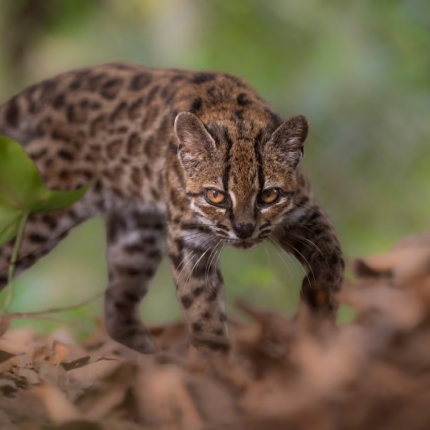
Photo credit: Fernando Faciole/National Geographic/Reuters
Just when we thought we knew all the cats in the world, a tiny spotted feline from Bolivia’s cloud forests has officially joined the family. Scientists have identified a new species of wild cat called the tilcayo, or Leopardus tilcayo. The discovery is particularly remarkable because it marks the first time a new living cat species has been formally named and described in more than a century.
Even better? This little wild cat is actually smaller than the average house cat.
advertisement
Meet the Tilcayo
The tilcayo is a small wild feline found in the Yungas region of Bolivia, a mountainous area of humid cloud forest along the eastern slopes of the Andes. At only about 18 inches long and weighing approximately 3 pounds, the tilcayo can be smaller than many domestic cats. But its appearance is decidedly wild.
The cat has light brown fur covered in dark, irregular rosettes that give it a miniature leopard-like appearance. It also has rounded ears and belongs to a group of small South American felines commonly known as tiger cats. Local communities were already familiar with the animal and called it “tilcayo.” Scientists chose to preserve that local name when officially naming the species Leopardus tilcayo.
How Did Scientists Discover a New Cat Species?
This wasn’t exactly a case of scientists wandering into the forest and suddenly spotting an animal nobody had ever seen before. Local people already knew these cats existed. The scientific mystery was figuring out exactly what they were. The story began when researchers encountered a Bolivian tiger cat whose appearance didn’t quite match existing descriptions of the known cats in its group. One individual was originally found as a kitten near a forest and was even kept by a local family who initially believed it was a domestic cat.
The unusual feline eventually came to the attention of wildlife researchers, who began asking an important question: What kind of tiger cat actually lives in Bolivia? Answering that question would eventually require looking much deeper than its spots.
DNA Revealed the Answer
Tiger cats are what scientists sometimes call “cryptic species.” Different species can look so similar that appearance alone isn’t enough to reliably tell them apart. Researchers therefore turned to genetics. The team analyzed DNA from dozens of cats collected across South America, including genetic material obtained from museum specimens. Their research revealed that animals previously grouped as tiger cats actually represent several genetically distinct species.
One lineage stood out: the cats living in Bolivia’s Yungas. Genetic analysis indicated that the tilcayo lineage separated from other tiger cats approximately 1.4 million years ago, providing strong evidence that these little cats represented their own distinct species. The researchers ultimately recognized five genetically distinct tiger cat species in South America.
Why Is This Discovery Such a Big Deal?
Scientists discover new species regularly, particularly among insects, plants, fungi, and other relatively understudied organisms. Discovering a new living species of cat is considerably rarer. Cats are mammals, relatively large compared with many newly discovered species, and have been studied extensively worldwide. The last comparable formal description of a living feline species occurred more than a century ago.
That makes the recognition of Leopardus tilcayo an extraordinary reminder that even among one of the world’s most familiar groups of animals, there are still discoveries waiting to be made.
Scientists Still Know Very Little About the Tilcayo
Although the tilcayo now has an official scientific name, much of its life remains a mystery. Researchers have had access to only a couple of living individuals along with a limited number of camera-trap observations. Early evidence suggests that the cats may be primarily active at night. Scientists have also found remains of small rodents in scat samples, suggesting rodents are at least part of the tilcayo’s diet.
Beyond that, many basic questions remain unanswered. Scientists still need to learn more about how many tilcayos exist, exactly where they live, how large their territories are, how they reproduce, what else they eat, and what threats they face in the wild.
One Tilcayo Was Mistaken for a House Cat
Perhaps the most charming part of the story is just how tiny these wild cats really are. One of the animals that helped researchers identify the species had been found as a kitten near a forest. A local family took the little animal home, believing they had found an unusual domestic cat. Eventually, it became apparent that their spotted “house cat” was something quite different.
The animal was transferred to a wildlife sanctuary and ultimately became one of the key individuals studied by researchers. Considering the average domestic cat commonly outweighs a tilcayo, the confusion isn’t as surprising as it might sound.
The Yungas Forest Is an Important Home for Wildlife
The discovery also puts a spotlight on the extraordinary ecosystem where the tilcayo lives. The Yungas are humid forests located along the eastern slopes of the Andes. Mountains rise through dense vegetation while clouds and mist frequently blanket the landscape, creating the cool, wet conditions associated with a cloud forest.
These forests support tremendous biodiversity, but they also face pressure from human activity. Deforestation, agriculture, mining, and other forms of habitat disturbance threaten portions of the region. For an animal with such a limited known range, habitat loss could be particularly concerning.
Could the Tilcayo Already Be Endangered?
It’s too early to know exactly how threatened the newly recognized species is. That’s partly because scientists don’t yet know how many tilcayos remain in the wild. Previously, tiger cats were grouped into broader species classifications when their conservation status was evaluated. Recognizing genetically distinct species means researchers may now need to examine each population separately.
A species occupying a relatively small geographic area can face very different conservation challenges than a widespread species, even if the two animals look nearly identical. Researchers hope the discovery will lead to additional studies of the tilcayo and stronger efforts to protect the Yungas habitat it depends upon.
There Could Be More Cats Waiting to Be Identified
The tilcayo discovery also raises an exciting possibility: scientists may not be finished reorganizing the feline family tree. Modern genetic technology allows researchers to compare animals in ways that weren’t possible when many species were originally classified. Two populations that look nearly identical may have been separated for hundreds of thousands or even millions of years.
In fact, the same research that identified the tilcayo also described a new tiger cat subspecies from Peru. As researchers combine DNA analysis, museum specimens, camera traps, and field observations, additional hidden diversity among the world’s small wild cats could eventually come to light.
advertisement
The Bottom Line
The newly recognized Leopardus tilcayo is a tiny, spotted wild cat living in Bolivia’s Yungas cloud forest. At roughly 3 pounds, it can be smaller than an ordinary house cat, yet genetic research revealed that its lineage has been separated from other tiger cats for approximately 1.4 million years. Its formal description represents the first newly named living cat species in more than a century.
Scientists still have much to learn about the tilcayo, including how many exist and how threatened the species may be. But its discovery already carries an important message. Even in the 21st century, our planet can still surprise us. And apparently, it can still surprise us with new cats.
Search
Follow us!


Popular Posts

Featured Articles

Polydactyl Cats: Just More Beans to Love
Polydactyl cats have become extremely popular in recent times. As a result, more and more people are interested in learning more about this six-toed cat and want to get one of their own. If you are a cat lover intrigued by polydactyl cats, you have come to the right place….

Greebles and Cats: The Origin and the Meaning
You may have seen an internet sensation concerning cats labeled “greebles.” Feel out of the loop? We’re here to help you. In 2019, Reddit user /user/literallyatree commented on a Reddit post about a cat that looks like it’s trying to slap a ghost. This user commented: “My family calls things…
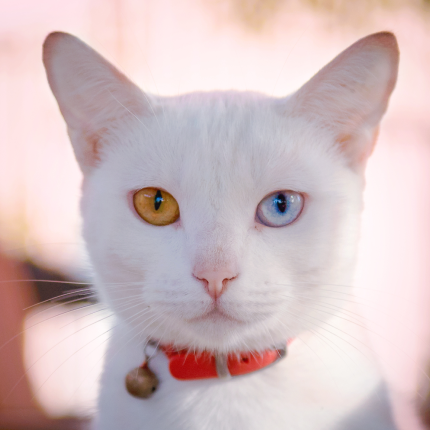
The Odd-Eyed Cat (AKA Heterochromia)
Cats are already beautiful and fascinating creatures, but people are bound to take notice when they have something as captivating as two different colored eyes. Odd-eyed cats always have one blue eye paired with either a green, yellow, or brown eye. This form of heterochromia occurs in other animals, including…