How to Get Your Cat to Stop Biting You
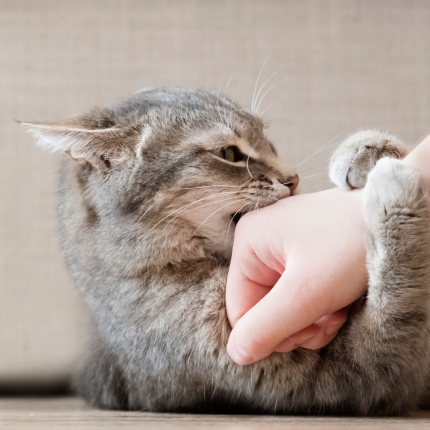
If a cat bites, the behavior usually isn’t “mean” — it’s communication, play gone too far, or a reaction to stress or overstimulation. The good news is that biting can often be reduced (or stopped) once the cause is identified and a consistent plan is followed.
advertisement
Step One: Figure Out Why the Cat Is Biting
Different causes require different solutions. Common reasons include:
- Play biting: Kittens and young cats often bite during play, especially if they were taught that hands are toys.
- Overstimulation: Some cats enjoy petting until it becomes too intense, then bite to make it stop.
- Fear or defensive biting: A scared or stressed cat may bite to protect itself, especially if it feels cornered.
- Redirected aggression: A cat that’s fired up by something it can’t reach (like a bird outside) may redirect that energy onto a nearby person.
Step Two: Watch for Warning Signs
Most cats give signals before they bite. Common “back off” cues include:
- Tail flicking or lashing
- Ears flattening or turning sideways
- Sudden body stiffness
- Dilated pupils
- Growling or low, tense vocalizations
Best practice: When these signs appear, stop interacting immediately. Respecting early cues prevents escalation.
Step Three: Stop Using Hands as Toys
Many cats bite because they learned that fingers = prey. To reset that association:
- Use wand toys, feather teasers, or kicker toys instead of hands
- Keep hands still during play (wiggling triggers hunting instincts)
- Let play end with a toy “catch” to satisfy the hunt sequence
Step Four: Respond Correctly When a Bite Happens
What not to do: Don’t yell, hit, or “flick” the cat’s nose. Punishment increases fear and often makes biting worse.
What to do instead:
- Freeze: Stop moving the hand/arm (movement can trigger more biting)
- Disengage calmly: Gently remove attention and step away
- Redirect: Offer an appropriate toy so the cat can bite something acceptable
Step Five: Adjust Petting and Handling
Some cats have a low threshold for touch. Short, gentle sessions are usually better than long petting marathons.
Often-Preferred Petting Spots
- Top of the head
- Cheeks
- Under the chin
Common Overstimulation Zones
- Belly
- Lower back
- Base of the tail
Tip: End petting before the cat reaches “too much.” Stopping on a good note builds trust.
Step Six: Add More Daily Enrichment
Bored, under-stimulated cats are more likely to nip or bite. Helpful upgrades include:
- Two short interactive play sessions per day
- Puzzle feeders or treat-dispensing toys
- Vertical space (cat trees, shelves, window perches)
- Safe “watching spots” near windows
Step Seven: Rule Out Pain or Medical Causes
If biting is sudden or escalating — especially in adult or senior cats — schedule a vet visit. Dental pain, arthritis, skin irritation, and other medical issues can reduce tolerance for touch.
Step Eight: Stay Consistent
Behavior change takes time. Cats learn best with predictable routines, calm boundaries, and consistent redirection. Every interaction is a lesson — so aim to reinforce “toy biting” and discourage “skin biting” the same way each time.
When to Get Professional Help
If bites are frequent, severe, or breaking skin regularly, consider help from a veterinarian or a certified feline behavior professional. They can identify triggers and create a personalized plan.
advertisement
The Bottom Line
Cats bite to communicate or because something in their environment, routine, or handling is pushing them past their comfort level. By learning warning signals, swapping hands for toys, adjusting petting style, and supporting enrichment, most households see a major improvement — and a calmer, safer relationship.
Disclaimer: This article is for informational purposes only and is not a substitute for professional veterinary advice. If a cat’s biting is sudden, severe, or paired with other symptoms, consult a veterinarian.
Search
Follow us!


Popular Posts

Featured Articles
Greebles and Cats: The Origin and the Meaning
You may have seen an internet sensation concerning cats labeled “greebles.” Feel out of the loop? We’re here to help you. In 2019, Reddit user /user/literallyatree commented on a Reddit post about a cat that looks like it’s trying to slap a ghost. This user commented: “My family calls things…

The Odd-Eyed Cat (AKA Heterochromia)
Cats are already beautiful and fascinating creatures, but people are bound to take notice when they have something as captivating as two different colored eyes. Odd-eyed cats always have one blue eye paired with either a green, yellow, or brown eye. This form of heterochromia occurs in other animals, including…
Polydactyl Cats: Just More Beans to Love
Polydactyl cats have become extremely popular in recent times. As a result, more and more people are interested in learning more about this six-toed cat and want to get one of their own. If you are a cat lover intrigued by polydactyl cats, you have come to the right place….